About Services Clients Capital Partners Space Economy 101 Insights Get in Touch
Capital Partners

Institutional Capital
Meets Space Assets

Caelum Space Leasing Limited applies proven aviation finance structures to the space economy. We provide sale-leaseback facilities and finance leases for satellites and ground stations — creating asset-backed, yield-generating exposure to the fastest-growing asset class of the next decade.

Four shifts that
create the asset class.

For the first time, satellites and ground infrastructure can be financed the way aircraft are. Four structural changes have arrived together — each one necessary, none of them sufficient on its own.

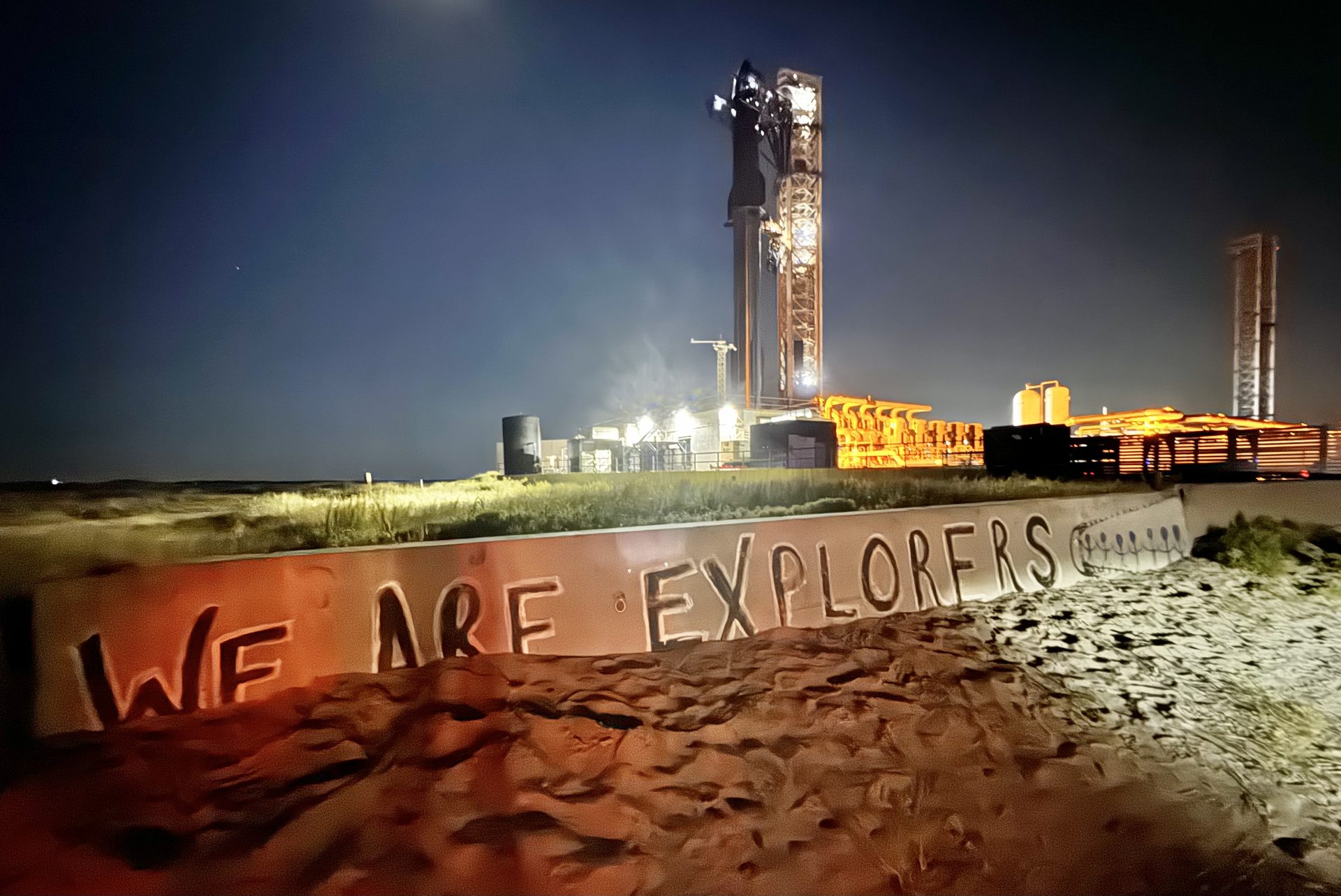
SpaceX Starship integrated stack at Boca Chica launch tower
Pillar 01

Launch economics — and Starship.

Cost to deliver mass to low Earth orbit has fallen from over $10,000 per kilogram in 2010 to under $1,500 today — a 90% collapse in a decade. Starship, in active flight test, promises an order-of-magnitude leap in payload capacity and a further unit-cost reduction. Asset classes that were uneconomic become routine.

$10,000/kg → <$1,500/kg · Starship: 100–150t to LEO
Pillar 02

Software-defined satellites & in-orbit servicing.

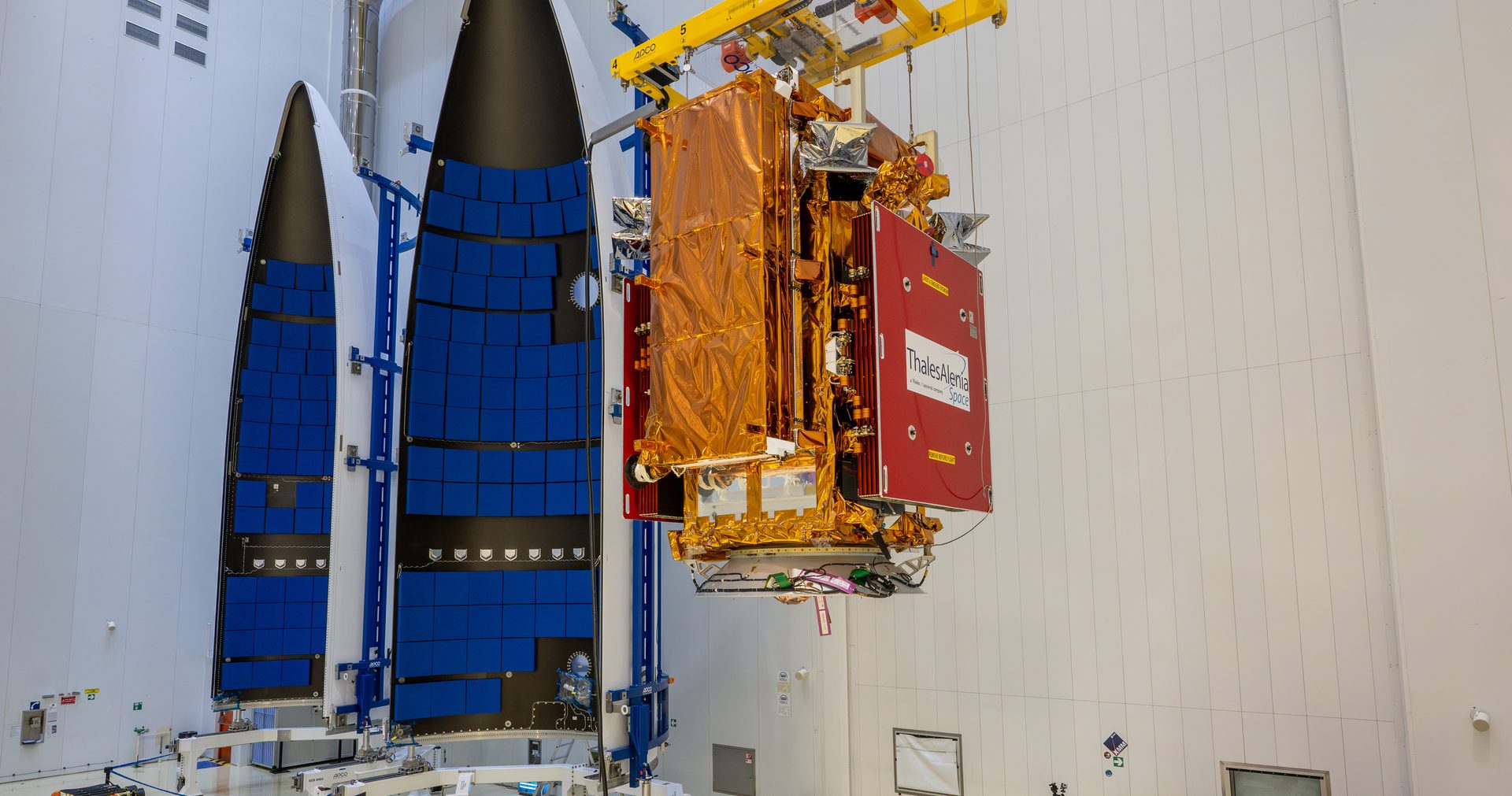
Eutelsat Quantum, Airbus OneSat and Thales Alenia Space INSPIRE can be reconfigured in orbit — frequency, beam pattern, coverage area, even the customer. Emerging in-orbit refuelling and life-extension services turn spacecraft from depreciating hardware into maintainable infrastructure. Caelum underwrites to a conservative zero-residual base case; reconfigurability is the recovery story, not the upside. In an event of default, a software-defined platform can be re-leased to a different operator on a different mission — the asset-class equivalent of repossessing an aircraft and placing it with another airline. Recourse, not residual.

Conservative residual · Re-deployable on default · Quantum · OneSat · INSPIRE
Pillar 03

Market transparency & commercial revenue dominance.

Over 75% of the space economy is now commercially driven — diversified revenue from telecoms, earth observation, IoT and navigation services, exactly the contracted cash flows lenders require. What has been missing is audited disclosure. A SpaceX or Starlink IPO triggers continuous, audited reporting on launch costs, unit economics, fleet performance and offtake margins — the comparable data institutional capital needs to underwrite the asset class at scale. The information threshold is about to be crossed.

75%+ commercial revenue share · from private estimates → audited public benchmarks
Copernicus Sentinel-1D being mated to Ariane 6 at the European Spaceport, Kourou
Pillar 04

European sovereign demand & legal framework.

The European Union has committed €10.6 billion to IRIS², its sovereign multi-orbit constellation, with material adjacent ground-segment investment required to operate it. Combined with national defence telecoms procurement across France, Germany and Italy, this creates a decade of long-dated, investment-grade offtake that did not exist five years ago. In parallel, the pending European Space Law and evolving property-rights regimes are building the legal infrastructure for asset registration and cross-border enforcement — mirroring the role the Cape Town Convention played in aviation.

IRIS² €10.6bn · sovereign offtake through 2035 · EU Space Law in progress

Aviation Leasing.
Applied to Space.

Over 50% of the world’s commercial aircraft fleet is leased. The same capital structures that enabled aviation’s growth — sale-leasebacks, finance leases, and portfolio-level facilities — are now being applied to space infrastructure.

Caelum is the bridge between institutional capital and commercial space operators. We acquire or finance satellites and ground stations, lease them to operators on long-term contracts, and generate predictable, asset-backed cash flows for our capital partners.

Our structures are familiar to any institutional investor or lender with exposure to aviation, infrastructure, or transportation finance. The asset class is new. The financial engineering is not.

$626B
Global space economy in 2025
$1T+
Projected by 2034
95%
Reduction in launch costs over the last decade
50%+
Of commercial aircraft are leased — space assets are next

How we protect
the asset.

Answers to the questions institutional capital asks first. The package is built from aviation-finance fundamentals, adapted for the operational reality of space.

Real-time telemetry & monitoring

Lease documentation grants the lessor continuous read-access to satellite telemetry — orbit, health, power, payload utilisation, anomaly logs. Underperformance is visible in days, not quarters. The same principle applies to ground-segment assets, with SCADA and uptime data reported under the lease. Early warning, not post-mortem.

Ground-segment step-in rights

On an event of default, the lessor has contractual step-in rights to the command and control chain. Where the operator runs primary TT&C, the lease requires backup command authority through an independent ground network (Caelum’s network partners include RBC Signals and NSC Ireland). The operator cannot continue to use the asset without the lessor’s cooperation.

Comprehensive insurance

Launch risk, in-orbit operations, third-party liability and total-loss cover, with the lessor as loss payee. The space insurance market is mature and consolidated — London, Munich, Zurich — and underwrites to standards familiar to any aviation lender.

Revenue assignment

Contracted cash flows from the operator’s end-customers — government agencies, telecoms, enterprises — are assigned directly to the SPV. This ring-fences the offtake from operator credit and survives operator insolvency where the service obligation can be transferred.

Lease covenants & default triggers

Operator obligations, maintenance standards, performance thresholds, and event-of-default triggers mirror aircraft lease covenants — minimum revenue coverage, cross-default with material operator debt, technical performance floors, insurance maintenance. Breach gives the lessor early remedies, not just terminal ones.

Spectrum, orbital slots & re-deployment

ITU filings and national licences are held by the operator and are not freely transferable. The lease structures this realistically: the asset is re-deployable to another licensed operator on default, and licence assignment is pre-negotiated with the relevant regulator wherever the jurisdiction permits. For software-defined platforms, mission change post-default is a design feature.

Jurisdiction & enforcement

Structured through Irish S.110 and EU-domiciled SPVs with a common-law legal framework, extensive treaty network, and courts experienced in asset-finance disputes. As the European Space Law and analogous frameworks mature, cross-border enforcement of space-asset security interests becomes progressively stronger — Cape Town for satellites.

Structured Exposure to
Space Assets

Asset-backed, yield-generating instruments built on proven financial engineering.

01

Sale-Leaseback — Operating Assets

An operator already has satellites in orbit generating revenue under existing customer contracts. We acquire the in-service asset and lease it back — unlocking the capital tied up in the fleet while the operator continues to earn from established revenue streams. Investors benefit from proven cash flows and a fully operational asset with a track record.

02

Sale-Leaseback — New Assets

A satellite manufacturer has a confirmed order with an operator but the operator needs financing. We acquire the asset on delivery and lease it back to the operator on a long-term contract — the manufacturer gets paid, the operator preserves capital, and investors receive contracted, asset-backed returns from day one.

03

Portfolio Facilities

For institutional investors and lenders seeking scale, we structure portfolio-level facilities across multiple assets and operators — diversifying risk while maintaining asset-backed security across a range of transaction types.

Interested in
Space Asset Finance?

We welcome conversations with institutional investors, lenders, family offices, and strategic partners exploring asset-backed exposure to the space economy.

Start a Conversation